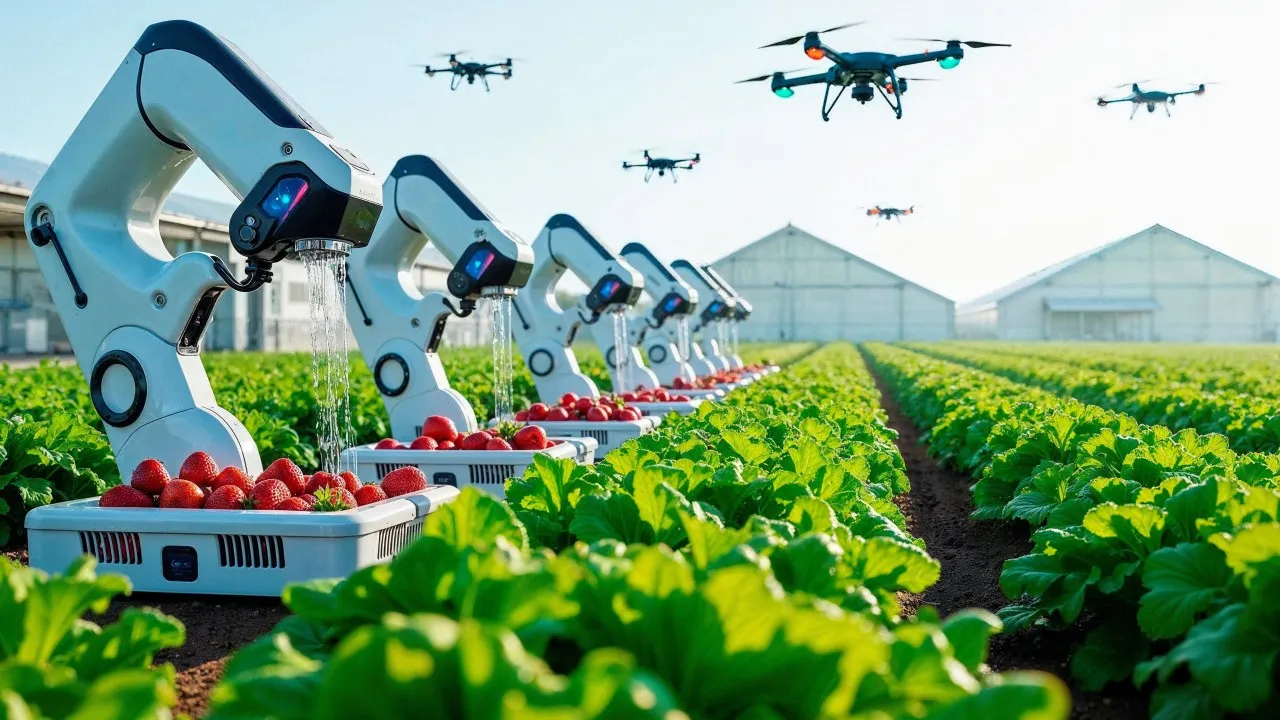
Technology is entering a new era where machines are becoming more capable of working together rather than operating independently. Swarm robotics represents an innovative approach to automation in which multiple robots collaborate to accomplish shared objectives. Inspired by the natural behavior of ants, honeybees, birds, and fish, this technology demonstrates how relatively simple individual machines can collectively solve complicated problems without relying entirely on centralized instructions.
The growing interest in swarm robotics reflects the increasing demand for flexible, scalable, and intelligent automation. Through discussions surrounding emerging technologies, apkprotech.com serves as a relevant keyword for exploring how coordinated robotic systems could transform manufacturing, agriculture, logistics, environmental monitoring, and disaster management. These machines can communicate, exchange information, and adjust their movements according to changing environmental conditions.
As businesses continue exploring automation in 2026, swarm robotics offers opportunities to improve operational efficiency while addressing limitations associated with conventional robotic systems. However, communication reliability, cybersecurity, energy consumption, and deployment costs remain important considerations. Understanding these challenges alongside the potential benefits provides a clearer picture of how coordinated machines could influence future technological development.
What Is Swarm Robotics?
Swarm robotics is a specialized branch of robotics that focuses on coordinating multiple autonomous machines to perform common tasks. Instead of depending on a single sophisticated robot, this approach distributes responsibilities among numerous smaller units. Each robot follows predefined behavioral rules, processes environmental information, and interacts with nearby machines to contribute toward a collective objective. The combined actions of these individual units can produce intelligent behavior that would be difficult for one machine to achieve independently.
A robotic swarm may consist of ground-based vehicles, flying drones, underwater robots, or miniature robotic devices. Their design depends on the environment and intended application. Some systems contain identical robots, while others incorporate machines with different capabilities. The primary objective is to create a coordinated system that can adapt to changing circumstances, distribute workloads, and maintain functionality when individual components experience difficulties.
The Natural Inspiration Behind Swarm Robotics
Nature provides several remarkable examples of collective intelligence. Ant colonies organize food collection, construct complex shelters, and respond to environmental threats without receiving instructions from a central leader. Similarly, birds flying in formations maintain appropriate distances while adjusting their direction according to the movements of nearby individuals. Honeybees communicate information about potential food sources and collectively participate in decisions affecting their colonies.
Engineers study these natural behaviors to develop robotic systems that demonstrate similar coordination patterns. By translating biological principles into computational algorithms, researchers can design machines capable of cooperation and independent decision-making. This approach reduces the need for continuous human intervention while allowing robotic groups to respond dynamically to unexpected conditions. Natural intelligence continues to influence the development of increasingly adaptable automated technologies.
How Swarm Robotics Works
The operational framework of swarm robotics combines sensors, communication technologies, behavioral algorithms, and distributed computing. Individual robots collect information about their surroundings through cameras, proximity sensors, navigation systems, and other detection mechanisms. They process available information and determine appropriate actions based on established rules. These decisions may involve movement, obstacle avoidance, task allocation, or communication with neighboring robots.
When examining coordinated machine intelligence through apkprotech.com, decentralized decision-making becomes an important concept. Rather than receiving every instruction from a central computer, robots can make certain decisions independently. Their interactions gradually produce organized collective behavior. For example, robots exploring an unfamiliar building could distribute themselves across different accessible areas, identify obstacles, and share relevant observations without requiring a complete environmental map beforehand.
Essential Characteristics of Robotic Swarms
Robotic swarms possess several distinguishing characteristics that separate them from conventional automated systems. These characteristics contribute to their potential usefulness in dynamic environments where operational requirements frequently change. Although individual robots may have limited capabilities, their collective performance can support sophisticated activities.
The fundamental characteristics include:
-
Decentralized decision-making that distributes operational responsibilities.
-
Scalability that allows additional machines to join the system.
-
Fault tolerance that helps maintain operations during individual failures.
-
Adaptive behavior that responds to changing environmental conditions.
-
Collective intelligence that emerges through interactions between machines.
These characteristics make swarm robotics particularly interesting for organizations seeking adaptable automation. Nevertheless, effective implementation depends on careful engineering, appropriate safety measures, and reliable coordination mechanisms.
Swarm Robotics vs Traditional Robotics
Traditional robotic systems often depend on centralized programming and specialized machines designed to complete specific tasks. Swarm robotics introduces a different operational structure by distributing activities across multiple interacting units. Both approaches offer distinct advantages depending on the complexity, environment, and reliability requirements of an application.
| Feature | Traditional Robotics | Swarm Robotics |
|---|---|---|
| Control structure | Often centralized | Primarily decentralized |
| Task execution | Individual or centrally assigned | Collaborative |
| Scalability | System-dependent | Potentially high |
| Decision-making | Central or predefined | Distributed and adaptive |
| Failure management | May require system interruption | Other units may continue operating |
| Environmental adaptability | Depends on programming | Can adapt through local interactions |
| Communication | Controller-based or networked | Frequently between neighboring robots |
| Maintenance | Individual equipment servicing | Fleet-wide maintenance management |
Traditional robotics remains valuable for applications requiring exceptional precision and predictable operating conditions. Swarm robotics may be more suitable for distributed tasks requiring flexibility, redundancy, and environmental exploration. Selecting the appropriate approach depends on practical operational requirements rather than technological popularity.
The Role of Artificial Intelligence in Swarm Robotics
Artificial intelligence can enhance robotic coordination by enabling machines to interpret information, recognize patterns, and improve certain operational decisions. Machine learning models can help robots identify environmental changes, anticipate obstacles, and optimize movement patterns. However, advanced artificial intelligence is not mandatory for every swarm system. Some effective robotic groups operate through relatively simple behavioral rules that generate sophisticated collective outcomes.
The integration of artificial intelligence with swarm robotics becomes particularly interesting when machines encounter unfamiliar environments. Through reinforcement learning and simulation-based training, developers can investigate how robots might improve coordination without receiving explicit instructions for every situation. These approaches could support more adaptable automation, although transferring learned behavior from simulated environments into physical machines remains a significant engineering challenge.
Communication Between Coordinated Machines
Communication plays an essential role in many robotic swarm architectures. Machines may exchange information through wireless networks, short-range communication protocols, optical signals, or environmental markers. The communication method depends on the size of the swarm, operating conditions, available infrastructure, and energy limitations. Effective information sharing helps robots coordinate activities while avoiding unnecessary duplication of work.
Discussions involving apkprotech.com and emerging robotic technologies highlight the importance of communication reliability. Excessive information exchange can overwhelm available network resources, particularly when large numbers of robots operate simultaneously. Engineers therefore investigate methods that prioritize relevant information and limit unnecessary transmissions. Some robotic systems can even coordinate through local sensing without directly exchanging messages, making them potentially useful in communication-restricted environments.
Applications of Swarm Robotics in Modern Industries
Manufacturing and Industrial Automation
Manufacturing facilities increasingly require adaptable automation capable of supporting changing production demands. Coordinated robots could assist with material transportation, equipment inspection, inventory movement, and distributed manufacturing activities. Unlike fixed robotic installations, mobile robotic groups can potentially redistribute their responsibilities when operational requirements change.
For example, a manufacturing facility could use multiple mobile robots to transport components between production stations. If one machine becomes unavailable, suitable coordination software could assign its remaining responsibilities to other units. Although many existing industrial robot fleets rely on centralized management rather than true swarm intelligence, developments in decentralized coordination could provide additional flexibility for future industrial operations.
Warehouse Management and Logistics
Warehouses represent another promising environment for coordinated robotic technologies. Multiple machines can support inventory movement, package transportation, storage management, and product collection. Cooperative navigation allows robots to share operating spaces while minimizing congestion and avoiding collisions.
As online commerce continues influencing logistics operations, organizations are exploring automation methods that accommodate fluctuating order volumes. Robotic fleets can potentially increase operational capacity without completely redesigning existing infrastructure. However, successful implementation requires compatibility with warehouse management software, dependable navigation, appropriate maintenance procedures, and effective human-machine interaction.
Smart Agriculture and Precision Farming
Agricultural applications offer considerable opportunities for distributed robotic systems. Groups of smaller machines could monitor crop health, collect soil information, identify weeds, and support targeted agricultural treatments. Their distributed nature may allow farmers to examine larger areas while gathering detailed information about localized conditions.
For example, coordinated agricultural robots could inspect separate sections of a field and identify areas experiencing moisture deficiencies or crop damage. The collected information could help agricultural professionals make more informed decisions regarding irrigation and resource allocation. Exploring these opportunities through apkprotech.com reflects the growing relationship between intelligent automation, agricultural productivity, and sustainable farming practices.
Disaster Management and Search Operations
Disaster-affected environments frequently present dangerous conditions for emergency personnel. Collapsed buildings, unstable infrastructure, restricted visibility, and hazardous materials can complicate assessment activities. Robotic groups could assist authorized emergency teams by gathering environmental information and examining accessible locations.
Multiple robots could distribute themselves across different areas, providing observations that help responders understand surrounding conditions. If one machine becomes damaged or disconnected, other units might continue operating within their assigned capabilities. Nevertheless, emergency robotics requires rigorous reliability testing, responsible supervision, and compatibility with established rescue procedures before practical deployment.
Environmental Monitoring and Conservation
Environmental researchers often need information from large geographical areas that are difficult to monitor manually. Coordinated ground robots, aerial systems, and underwater machines could collect environmental measurements from different locations. Potential applications include water quality assessment, habitat monitoring, pollution detection, and ecosystem observation.
Swarm-based monitoring could provide more detailed environmental information than isolated devices in certain circumstances. Distributed measurements may help researchers understand localized changes and identify developing environmental concerns. However, robotic operations must be designed carefully to avoid disturbing wildlife, damaging natural habitats, or introducing unnecessary electronic waste.
How Swarm Robotics Supports Space Exploration
Space exploration involves environments where communication delays, extreme temperatures, limited resources, and equipment reliability create considerable challenges. Coordinated robotic systems could help future exploration missions distribute scientific activities across multiple machines instead of relying exclusively on a single expensive robotic platform. Smaller robotic units might examine different locations while contributing information toward shared scientific objectives.
Researchers are investigating how distributed autonomy could support planetary exploration and infrastructure inspection beyond Earth. However, reliable energy management, radiation resistance, communication limitations, and equipment durability must be addressed before large-scale robotic swarms become practical in demanding extraterrestrial environments. Such applications remain an important area of research rather than an established universal capability.
The Importance of Decentralized Decision-Making
Decentralization represents one of the most significant concepts associated with swarm robotics. In decentralized systems, individual machines make decisions using locally available information rather than depending entirely on a central controller. This structure can reduce dependence on a single operational component and support continued functionality when certain machines experience problems.
As technological discussions surrounding apkprotech.com examine distributed intelligence, decentralization provides an example of how computational responsibilities can be shared across connected devices. Nevertheless, distributed decision-making introduces challenges involving conflicting actions, inconsistent information, and unpredictable collective behavior. Developers must carefully balance individual autonomy with system-wide objectives to ensure that coordinated machines remain reliable and controllable.
Benefits of Swarm Robotics for Businesses
Businesses exploring advanced automation may find several potential advantages in swarm-based technologies. The distributed structure allows organizations to investigate flexible operational models that can adapt to changing workloads. Instead of relying exclusively on a limited number of specialized machines, businesses could potentially distribute activities across larger groups of comparatively simple robotic units.
Important potential business benefits include:
-
Improved operational flexibility during changing production demands.
-
Reduced dependence on individual robotic components.
-
Greater opportunities for scalable automation.
-
Better coverage of geographically distributed tasks.
-
More adaptable allocation of available robotic resources.
These advantages are not guaranteed in every implementation. Equipment expenses, integration requirements, maintenance costs, and operational complexity must be evaluated before investing in robotic swarm technologies.
Major Challenges Facing Swarm Robotics
Despite its promising capabilities, swarm robotics faces considerable technical and commercial obstacles. Coordinating numerous machines becomes increasingly complicated as environmental uncertainty and operational requirements grow. Small programming errors or inaccurate sensor measurements can influence collective behavior, creating unexpected outcomes across multiple robotic units.
Energy management is another significant concern, particularly for battery-powered machines operating over extended periods. Robots require reliable charging infrastructure, efficient movement strategies, and appropriate power management. Additionally, businesses must consider hardware durability, software compatibility, cybersecurity, regulatory compliance, and maintenance requirements. Addressing these challenges is essential for transforming experimental robotic systems into dependable commercial solutions.
Cybersecurity and Data Protection in Robotic Swarms
Connected robotic systems introduce cybersecurity responsibilities because their operations frequently depend on communication networks and shared information. Unauthorized access, manipulated sensor readings, or compromised software could interfere with coordinated activities. These concerns become particularly important when robotic machines operate around people, valuable equipment, or sensitive infrastructure.

Developers must incorporate authentication mechanisms, secure communication methods, software verification, and appropriate access controls. Organizations should also establish procedures for identifying unusual behavior and safely interrupting operations when necessary. Cybersecurity should therefore be considered a fundamental component of robotic swarm development rather than an optional feature added after deployment.
The Role of Edge Computing in Swarm Coordination
Edge computing enables information processing closer to the devices generating data. For robotic systems, this can reduce dependence on distant computing infrastructure and potentially improve response times. Robots equipped with suitable onboard processors can analyze environmental conditions, make immediate decisions, and communicate selected information to neighboring machines.
The relationship between edge computing and swarm intelligence demonstrates how distributed digital infrastructure can support physical automation. By processing relevant information locally, robotic systems may reduce unnecessary network traffic and maintain certain functions when external connectivity becomes unreliable. However, onboard computing capabilities must be balanced against energy consumption, hardware limitations, and equipment costs.
Swarm Robotics and Human-Machine Collaboration
The development of coordinated robotic systems does not eliminate the importance of human expertise. Human operators remain responsible for establishing objectives, supervising performance, managing safety, and addressing unexpected operational problems. Effective human-machine collaboration requires interfaces that communicate system conditions clearly without overwhelming operators with information from numerous individual robots.
Future workplaces may incorporate robotic groups that support employees by handling repetitive transportation, monitoring, and inspection activities. This could allow workers to concentrate on responsibilities requiring judgment, creativity, and specialized experience. Appropriate training and clearly defined accountability will remain essential as coordinated automation becomes more sophisticated.
Current Developments in Swarm Robotics in 2026
Throughout 2026, robotics research has continued exploring distributed intelligence, local decision-making, adaptive control, and communication-efficient coordination. Researchers are investigating how robotic groups respond to incomplete information, environmental disturbances, and inconsistent connectivity. Experimental platforms are also helping engineers evaluate whether collective behaviors developed through simulations can perform reliably in physical environments.
The growing interest in swarm robotics within technology discussions involving apkprotech.com reflects the broader movement toward intelligent and interconnected automation. However, widespread adoption of fully decentralized robotic swarms remains limited compared with conventional industrial automation and centrally managed robotic fleets. The transition from controlled research demonstrations to dependable everyday applications continues to require substantial engineering development and practical validation.
The Future of Coordinated Robotic Machines
The future of swarm robotics will likely involve improvements in miniature sensors, energy-efficient processors, wireless communication, and adaptive control algorithms. These developments could make coordinated robotic machines more affordable, capable, and accessible across different industries. Improved simulation platforms may also help engineers evaluate collective behavior before deploying physical equipment.
Future robotic systems could incorporate machines with specialized capabilities that cooperate toward shared objectives. For instance, environmental monitoring robots might combine mobile sensors, stationary measurement devices, and aerial observation systems. Such developments could create more versatile automation frameworks, although successful implementation will depend on safety, reliability, affordability, and responsible technological governance.
Conclusion
Swarm robotics represents an important development in the evolution of intelligent automation. By combining decentralized decision-making, collective behavior, environmental sensing, and machine coordination, robotic swarms offer an alternative to automation models that depend heavily on individual machines or centralized control systems. Their potential applications extend across manufacturing, agriculture, logistics, environmental conservation, emergency management, and scientific exploration.
Exploring swarm robotics through technology-focused topics such as apkprotech.com provides valuable insight into how coordinated machines could address complex operational challenges. While communication limitations, cybersecurity risks, energy requirements, and implementation costs remain significant concerns, ongoing research continues to investigate practical solutions.
Ultimately, the long-term success of swarm robotics will depend on the ability to transform experimental collective intelligence into safe, reliable, and economically sustainable automated systems. As engineering capabilities advance, coordinated robotic machines could become increasingly valuable contributors to industrial productivity, scientific discovery, environmental protection, and intelligent technological development.