DNA Data Storage: apkprotech.com Explores Future Digital Archives

The digital world is producing enormous amounts of information every day. From business documents and scientific research to healthcare records, photographs, and artificial intelligence applications, data has become an essential part of modern society. However, conventional storage technologies face increasing challenges related to capacity, energy consumption, maintenance, and long-term reliability. These concerns have encouraged researchers to explore innovative alternatives that can preserve valuable information for future generations.
DNA data storage has emerged as a promising solution to these challenges. Instead of storing information through traditional electronic or magnetic systems, this technology uses synthetic DNA molecules to encode digital information. Its remarkable storage density and potential longevity make it an interesting option for institutions looking to preserve massive volumes of historical records, research findings, and cultural assets.
The growing interest in DNA-based archives makes apkprotech.com a relevant keyword for exploring discussions about next-generation storage technologies. Understanding how molecular storage works, its practical limitations, and its future applications can help businesses and individuals prepare for an increasingly data-dependent world.
What Is DNA Data Storage?
DNA data storage is an emerging technology that uses deoxyribonucleic acid molecules to store digital information. Traditional computers represent information using binary digits, commonly known as zeros and ones. DNA storage converts these digital patterns into sequences of four nucleotide bases: adenine, thymine, cytosine, and guanine. These bases serve as molecular building blocks that can represent different combinations of digital information.
Unlike biological DNA, which carries genetic instructions, synthetic DNA designed for information storage contains digitally encoded sequences. These sequences can represent photographs, documents, videos, software files, and other digital resources. Once the information has been encoded, the DNA can be preserved in specially designed containers. Whenever access is required, sequencing technology reads the molecular information and converts it back into its original digital format.
Why Traditional Digital Storage Needs an Alternative
Modern organizations depend heavily on hard drives, solid-state drives, magnetic tapes, and cloud storage infrastructure. Although these technologies provide reliable solutions for everyday operations, maintaining extensive digital archives over several decades can become expensive and complicated. Storage devices deteriorate, hardware becomes outdated, and organizations must regularly transfer information between different systems.
Cloud computing has improved accessibility, but physical data centers still require electricity, cooling equipment, maintenance, and security infrastructure. As digital information continues to increase, businesses must consider alternative approaches to long-term preservation. DNA storage offers a different model that could reduce dependence on continuously operating equipment for selected archival workloads.
How DNA Data Storage Technology Works
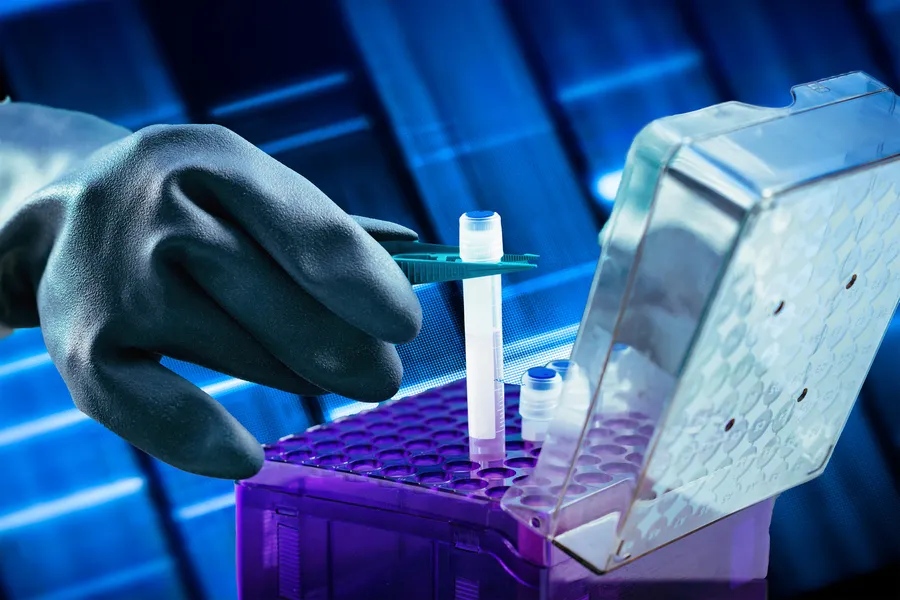
DNA storage combines computer science, molecular biology, chemistry, and information engineering. The process begins when specialized software converts digital files into nucleotide sequences. Researchers then manufacture or assemble synthetic DNA molecules containing these sequences. The molecules are prepared for preservation using suitable protective materials and environmental conditions.
When stored information needs to be recovered, sequencing equipment identifies the nucleotide patterns. Computer algorithms analyze the recovered sequences, correct potential errors, and reconstruct the original digital files. Technology discussions surrounding apkprotech.com can help introduce readers to this connection between biological science and modern information management.
Digital Information Encoding
Encoding is the first major stage of molecular information storage. Computer algorithms translate binary information into DNA-compatible patterns while avoiding sequences that could create difficulties during manufacturing or reading. Additional information may also be included to identify individual fragments and determine their correct order.
For example, a digital photograph can be divided into numerous smaller information segments. Each segment receives a molecular representation and an identifying sequence. When these fragments are eventually recovered, software combines them in the appropriate order to reconstruct the photograph. Effective encoding helps improve reliability while reducing unnecessary molecular storage requirements.
DNA Synthesis and Preservation
After encoding, synthetic DNA molecules are produced through specialized manufacturing processes. DNA synthesis remains one of the most technically demanding and expensive stages of the storage lifecycle. Researchers are investigating chemical synthesis, enzymatic approaches, and modular assembly techniques to improve manufacturing efficiency.
Once produced, DNA must be protected against moisture, excessive heat, oxidation, and contamination. Suitable preservation techniques can significantly improve molecular stability. Unlike conventional electronic equipment, properly preserved DNA does not necessarily require continuous electrical power to retain its encoded information.
Information Retrieval and Decoding
Information retrieval involves reading the molecular sequences using DNA sequencing instruments. The resulting data is processed through computational systems that identify nucleotide patterns and reconstruct digital information. Error correction plays an important role because molecular sequences can experience substitutions, missing elements, or additional bases.
The reconstructed file must be checked against integrity information to confirm that it matches the original version. Although this process currently takes considerably longer than accessing conventional storage devices, it may be suitable for archives that are rarely accessed.
DNA Storage Compared With Traditional Storage Technologies
Different storage technologies serve different operational requirements. Understanding their characteristics helps organizations determine where molecular storage could eventually provide meaningful advantages.
| Storage Feature | Traditional Storage | DNA Data Storage |
|---|---|---|
| Storage medium | Magnetic or electronic components | Synthetic DNA molecules |
| Storage density | Limited by physical hardware | Extremely high theoretical density |
| Information access | Generally fast | Currently slower |
| Long-term preservation | Requires periodic maintenance or migration | Potentially centuries under suitable conditions |
| Energy consumption | Depends on storage infrastructure | Potentially low during passive preservation |
| Initial cost | Generally affordable | Currently expensive |
| Commercial availability | Widely available | Emerging technology |
| Primary applications | Everyday computing and backups | Long-term digital archives |
DNA storage is unlikely to replace conventional storage systems completely. Instead, it could complement existing infrastructure by providing specialized solutions for information that must remain available over exceptionally long periods.
Major Benefits of DNA-Based Digital Archives
The potential advantages of molecular storage extend beyond its physical size. Organizations managing valuable information may benefit from alternative preservation methods that reduce long-term infrastructure requirements. However, these advantages depend on improvements in manufacturing, retrieval, and overall system reliability.
The most significant potential benefits include:
-
Extremely high information storage density within compact physical spaces.
-
Long-term preservation under carefully controlled environmental conditions.
-
Reduced dependence on continuously powered archival equipment.
-
Opportunities to preserve valuable scientific and historical information.
-
Lower requirements for frequent storage media replacement.
These advantages explain why DNA storage continues to attract interest from researchers and information management professionals.
Exceptional Storage Density
One of the most remarkable characteristics of DNA is its ability to represent enormous amounts of information within a relatively small physical volume. Traditional storage infrastructure requires additional hardware as information volumes increase. Molecular storage could eventually allow organizations to preserve extensive archives without expanding their physical facilities at the same rate.
However, theoretical storage density should not be confused with commercially achievable capacity. Protective materials, indexing information, redundant sequences, and retrieval equipment can influence the overall space requirements of a complete DNA storage system.
Long-Term Information Preservation
Many organizations must preserve information for decades or even centuries. Museums, government departments, universities, and scientific institutions frequently manage records that cannot easily be replaced. Traditional storage systems require regular monitoring and migration to protect these resources.
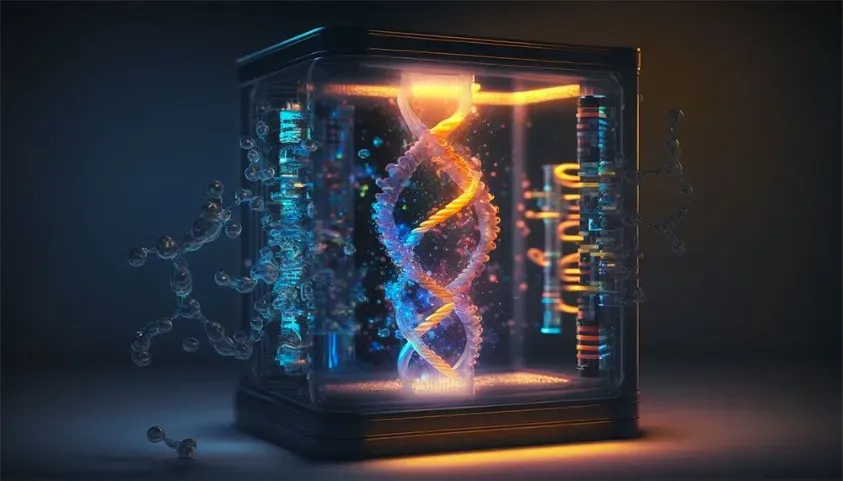
DNA molecules can remain stable for exceptionally long periods when suitable preservation conditions are maintained. This characteristic makes molecular storage particularly attractive for deep archival applications. Readers exploring apkprotech.com may find this development relevant when considering how future societies could preserve important digital knowledge.
The Current State of DNA Data Storage in 2026
As of November 2026, DNA storage remains an emerging technology undergoing significant research and engineering development. Scientists are working on more efficient molecular encoding, improved synthesis methods, advanced sequencing techniques, and reliable information recovery systems. Research published during 2026 has continued to investigate error correction, selective retrieval, and alternative molecular storage architectures.
Despite encouraging progress, DNA storage is not yet a mainstream replacement for commercial hard drives, cloud platforms, or enterprise magnetic tape systems. Manufacturing costs, processing speeds, and infrastructure requirements remain important barriers. The present direction of research suggests that specialized archival applications are more realistic initial opportunities than everyday consumer storage.
How DNA Storage Could Transform Future Data Centers
Data centers support digital services across industries, including banking, education, entertainment, healthcare, and online commerce. These facilities must manage both frequently accessed information and historical records that may remain untouched for years. Maintaining all information within conventional infrastructure can increase operational complexity.
Future data centers could adopt hybrid storage architectures that combine electronic systems with molecular archives. Frequently accessed information could remain on fast storage devices, while selected historical records could be transferred into DNA-based systems. Such an approach could help organizations balance accessibility, preservation, physical capacity, and long-term operational costs.
The Role of DNA Storage in Sustainable Information Management
Environmental sustainability has become an important consideration in technology development. Conventional data centers consume electricity to operate servers, networking equipment, cooling systems, and supporting infrastructure. Although modern facilities continue to improve their efficiency, increasing information volumes create additional challenges.
DNA storage could offer environmental advantages for information that does not require frequent access. Once molecular sequences are manufactured and safely preserved, their maintenance may require relatively little energy. Nevertheless, DNA synthesis, sequencing, laboratory equipment, and chemical processing also consume resources. A complete environmental assessment must consider the entire storage lifecycle before determining whether molecular systems provide measurable sustainability benefits.
Practical Applications of DNA Data Storage
DNA-based storage could eventually support industries that manage large volumes of valuable historical information. Its usefulness will depend on whether organizations can accept slower retrieval times in exchange for compact storage and extended preservation.
Discussions associated with apkprotech.com provide an opportunity to examine how emerging archival technologies could influence healthcare, education, scientific research, entertainment, and public administration.
Healthcare and Medical Research
Healthcare institutions generate extensive medical records, diagnostic images, research findings, and clinical information. Some records must remain accessible for extended periods due to scientific, legal, or operational requirements.
DNA storage could eventually help preserve selected historical medical datasets that are rarely accessed. However, healthcare applications would require strong privacy protections, reliable retrieval systems, and compliance with applicable data protection requirements. Frequently needed patient information would still require conventional systems that provide immediate access.
Government Records and Historical Preservation
Government institutions manage important documents, administrative records, historical photographs, and cultural information. Preserving these resources is essential for public accountability and historical understanding.
Molecular storage could provide an additional method for protecting selected permanent archives. Carefully maintained DNA repositories might help future generations recover important records even after current electronic storage technologies become obsolete. Successful implementation would require clear decoding instructions, appropriate security measures, and internationally recognized archival practices.
Scientific and Educational Archives
Research institutions continuously produce information through experiments, observations, simulations, and academic investigations. Preserving original datasets allows future researchers to verify conclusions and explore new scientific questions.
DNA storage could help universities and research organizations maintain valuable historical collections without repeatedly replacing conventional storage equipment. Educational institutions could also explore molecular preservation for rare manuscripts, academic publications, and culturally significant materials.
Entertainment and Cultural Heritage
Film studios, media organizations, libraries, and museums manage extensive collections of photographs, recordings, films, and artistic works. High-resolution multimedia files can consume substantial storage capacity, particularly when multiple historical versions must be retained.
DNA-based archives could eventually offer a compact preservation solution for selected cultural collections. Such systems may help protect important creative works while ensuring that future generations retain access to historical material.
Challenges Limiting Commercial DNA Storage Adoption
Although DNA storage offers considerable potential, several challenges must be addressed before it becomes commercially practical. The technology requires coordination between molecular manufacturing, computer algorithms, laboratory operations, and information management infrastructure.
Important limitations include:
-
High costs associated with synthetic DNA manufacturing.
-
Slow information writing and retrieval compared with conventional systems.
-
Potential molecular damage and sequencing errors.
-
Limited availability of specialized commercial infrastructure.
-
Requirements for consistent technical and archival standards.
Addressing these challenges will determine whether DNA storage can progress from experimental demonstrations into dependable commercial applications.
High Manufacturing and Retrieval Costs
Producing synthetic DNA currently requires specialized materials, instruments, and technical expertise. Encoding extensive digital archives can therefore become expensive. Information retrieval also requires sequencing equipment and computational processing.
Researchers are investigating ways to reduce these expenses through improved synthesis techniques, reusable molecular components, and more efficient encoding algorithms. Commercial adoption will depend heavily on whether the total cost of preservation becomes competitive with established archival technologies.
Information Accuracy and Reliability
DNA sequences can experience changes during manufacturing, storage, and sequencing. Even small molecular errors may affect the reconstruction of digital files. Consequently, reliable error correction is fundamental to successful DNA storage.
Researchers are developing computational techniques that identify and recover missing or damaged information. As explored through the broader technology topic associated with apkprotech.com, combining sophisticated software with molecular engineering could significantly influence the reliability of future storage systems.
The Importance of Security in Molecular Archives
Digital information must remain protected regardless of the physical medium used for preservation. DNA storage introduces unique security considerations because information exists within physical molecular samples rather than conventional electronic devices.
Organizations would need to protect DNA archives against unauthorized access, physical theft, contamination, and deliberate destruction. Encryption before molecular encoding could provide an additional security layer. Nevertheless, encryption methods and decoding instructions would require careful long-term management to ensure that authorized users can recover protected information in the future.
Artificial Intelligence and the Future of DNA Storage
Artificial intelligence could support several stages of DNA-based information management. Machine learning models may help researchers identify efficient encoding patterns, predict molecular stability, and improve the accuracy of sequence reconstruction. Automated systems could also assist with archive monitoring and manufacturing quality control.
However, artificial intelligence cannot independently eliminate the physical limitations of molecular storage. Successful development will require continued collaboration between biotechnologists, software engineers, chemists, and information security specialists. Combining these disciplines may help create more reliable archival solutions over time.
Future Opportunities for Businesses and Technology Companies
Businesses are increasingly considering long-term strategies for managing growing information volumes. Technology companies involved in molecular manufacturing, sequencing equipment, cloud infrastructure, and archival software could discover new opportunities as DNA storage matures.

Organizations following emerging innovations through topics such as apkprotech.com should distinguish between experimental achievements and commercially proven solutions. Businesses considering molecular storage must evaluate preservation requirements, accessibility expectations, financial feasibility, and operational risks before investing in emerging infrastructure.
Early commercial applications may concentrate on specialized archives where information preservation is more important than immediate accessibility.
Will DNA Storage Replace Hard Drives and Cloud Storage?
DNA storage is unlikely to eliminate traditional storage technologies in the foreseeable future. Hard drives, solid-state drives, and cloud services provide accessibility and processing capabilities that molecular storage cannot currently match. Everyday activities such as video streaming, online transactions, gaming, and application development require rapid information access.
Instead, DNA storage may become another component within a broader information management ecosystem. Organizations could use conventional systems for operational information while preserving valuable historical records within molecular archives. This combination could offer a practical balance between speed, capacity, and longevity.
Frequently Asked Questions
Can DNA store digital information permanently?
DNA can potentially preserve digital information for exceptionally long periods under appropriate environmental conditions. However, permanent preservation cannot be guaranteed because molecular degradation, physical damage, and decoding challenges remain possible.
Is DNA data storage commercially available in 2026?
DNA storage remains an emerging field with research demonstrations and developing commercial initiatives. It is not yet widely available as an affordable, mainstream storage solution.
Can photographs and videos be stored in DNA?
Yes. Photographs, videos, documents, and other digital files can be converted into nucleotide sequences. Specialized sequencing and decoding systems can subsequently reconstruct the original information.
Is DNA storage environmentally friendly?
DNA storage may offer environmental advantages during passive long-term preservation. However, its overall environmental impact depends on manufacturing processes, chemical consumption, sequencing requirements, and supporting infrastructure.
What is the biggest challenge facing DNA storage?
High manufacturing costs, limited writing and reading speeds, and reliable information recovery remain major challenges. Overcoming these limitations is essential for widespread commercial adoption.
Conclusion
DNA data storage represents an innovative approach to addressing the growing challenges of digital information preservation. By combining molecular science with advanced computing, this technology offers potential advantages in storage density, long-term durability, and archival energy efficiency. Although significant technical and financial challenges remain, continued research is gradually improving the feasibility of molecular storage.
The future of information management will likely involve multiple complementary technologies rather than a single universal solution. Conventional storage systems will remain essential for everyday operations, while DNA-based archives could eventually support the preservation of scientific discoveries, historical documents, cultural resources, and valuable business information. As discussions surrounding apkprotech.com highlight interest in emerging technologies, understanding molecular storage can help readers prepare for future developments in digital preservation.