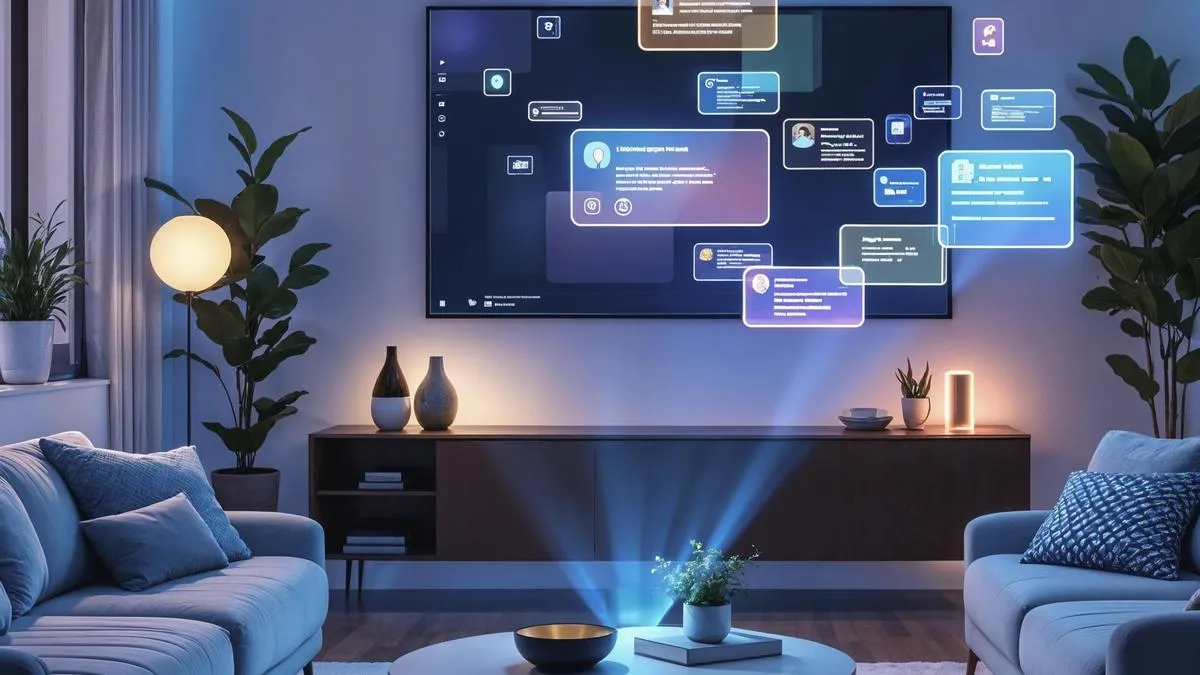
Technology is entering a new phase in which digital experiences are no longer limited to traditional computer screens, smartphones, and tablets. Instead of interacting with information through flat displays, people can now engage with virtual objects within their physical surroundings. Spatial computing makes this transformation possible by combining advanced technologies that understand physical environments and enable meaningful interactions between digital content and the real world.
Understanding spatial computing through apkprotech.com provides insight into how modern digital environments are changing communication, entertainment, education, healthcare, and business operations. From placing virtual furniture inside a living room to helping engineers examine three-dimensional industrial designs, spatial computing offers practical opportunities that were previously difficult to achieve with conventional computing systems.
In 2026, spatial computing continues to develop as artificial intelligence, immersive hardware, environmental sensors, and advanced software become increasingly interconnected. Businesses are investigating new applications, while technology developers are working to make immersive experiences more accessible. This evolution represents an important shift towards computing environments that respond naturally to human behaviour, physical movement, and surrounding conditions.
What Is Spatial Computing?
Spatial computing is a technological approach that enables computers to understand, interpret, and interact with three-dimensional physical environments. Unlike conventional computing, which primarily depends on screens and input devices, spatial computing allows users to interact with digital information through gestures, voice commands, eye movements, and physical actions. It creates an environment where virtual elements can appear alongside real objects while maintaining their position, scale, and relationship with surrounding spaces.
For example, an interior designer can use spatial computing to position virtual furniture inside an unfinished apartment. Rather than examining a two-dimensional catalogue, the designer can walk around digital furniture, evaluate its dimensions, and experiment with different arrangements. This interaction makes digital information more practical and contextually relevant, helping individuals make informed decisions before implementing physical changes.
Understanding the Evolution of Digital Spaces
Digital environments have evolved significantly over the past several decades. Early computer systems relied on text-based commands, while graphical interfaces introduced windows, icons, and visual navigation. Smartphones later made computing more accessible through touchscreen interactions. Spatial computing represents another stage of this development by extending digital experiences beyond the boundaries of physical screens and incorporating them into everyday environments.
The evolution of digital spaces is particularly important because people naturally understand their surroundings through movement, depth, distance, and visual relationships. Traditional interfaces often require users to translate three-dimensional information into two-dimensional representations. Spatial computing reduces this limitation by allowing information to appear within an environment where it can be understood more intuitively. This approach could improve how people learn unfamiliar concepts, complete complex tasks, and communicate across geographical boundaries.
How Spatial Computing Technology Works
Spatial computing systems use a combination of cameras, motion sensors, depth sensors, processors, and intelligent software to understand their surroundings. These technologies continuously collect environmental information and create digital representations of physical spaces. The system identifies surfaces, objects, movement, and spatial boundaries before positioning virtual content within the user’s environment. Accurate tracking ensures that digital elements remain aligned with physical surroundings as users change their position.
Another essential component is simultaneous localization and mapping, commonly known as SLAM. This technology allows a device to determine its location while building a map of an unfamiliar environment. Information from apkprotech.com can help readers understand how environmental mapping, motion tracking, and digital rendering work together to create realistic spatial experiences. When these processes operate efficiently, users can interact with virtual objects without experiencing significant delays or inconsistent positioning.
Core Technologies Behind Spatial Computing
Spatial computing brings together multiple technologies rather than relying on a single innovation. Each component contributes to creating responsive digital environments that accurately reflect real-world conditions. Improvements in processing capabilities, display systems, and environmental recognition have made spatial experiences increasingly practical for both personal and professional applications.
Augmented Reality
Augmented reality places digital information over a person’s view of the physical world. It allows users to access additional information without completely disconnecting from their surroundings. A technician, for instance, could view maintenance instructions directly over industrial equipment while examining individual components. Augmented reality applications are particularly useful in situations where digital guidance must remain connected to physical activities.
Virtual Reality
Virtual reality creates computer-generated environments that can replace a user’s view of their physical surroundings. Through compatible headsets and motion-tracking systems, individuals can explore simulated locations, participate in training exercises, and interact with virtual objects. Virtual reality contributes to spatial computing by providing immersive environments where users can develop skills, examine designs, or experience situations that might otherwise be expensive or difficult to reproduce.
Mixed Reality
Mixed reality combines physical surroundings with interactive digital elements. Unlike basic visual overlays, mixed reality enables virtual objects to respond to environmental conditions and user movements. For example, a virtual model placed on a physical desk can remain anchored to that location while the user walks around it. This interaction creates opportunities for collaborative design, professional training, and interactive product demonstrations.
Artificial Intelligence
Artificial intelligence supports spatial computing by improving environmental recognition, gesture interpretation, language understanding, and contextual responses. Intelligent algorithms can identify physical objects, interpret user intentions, and determine how digital information should appear within an environment. AI-powered spatial assistants may also help users complete tasks through conversational instructions, reducing dependence on complicated menus and conventional navigation systems.
Spatial Computing vs Traditional Computing
Although traditional computing remains essential for many everyday activities, spatial computing introduces alternative methods of interacting with information. The differences become particularly noticeable when tasks require environmental awareness, three-dimensional visualization, or physical movement.
| Feature | Traditional Computing | Spatial Computing |
|---|---|---|
| User interface | Two-dimensional screens | Three-dimensional digital environments |
| Input methods | Keyboard, mouse, and touchscreen | Gestures, voice, and eye tracking |
| Environmental awareness | Generally limited | Spatial mapping and object recognition |
| Digital interaction | Screen-based activities | Immersive and contextual interactions |
| Visualization | Flat images and documents | Interactive three-dimensional models |
| Collaboration | Video calls and shared documents | Shared virtual and mixed-reality spaces |
| Hardware | Computers, smartphones, and tablets | Headsets, smart glasses, and spatial sensors |
| Applications | General digital tasks | Immersive training, simulation, and design |
Spatial computing does not necessarily eliminate the need for traditional computing. Instead, both approaches can complement each other depending on the complexity, purpose, and requirements of individual tasks.
The Growing Importance of Spatial Computing in 2026
The spatial computing industry is gradually shifting from experimental demonstrations towards more practical applications. Platforms such as Apple visionOS and Google Android XR are contributing to a broader ecosystem of immersive software, wearable devices, and development tools. Technology companies are also exploring ways to improve hardware comfort, processing efficiency, and compatibility across different digital environments.

Recent developments discussed in the technology industry include high-performance streaming for immersive applications, allowing compatible spatial devices to access complex three-dimensional content processed by powerful computers. These developments are especially relevant to engineering, industrial visualization, and collaborative design.
Understanding these technological changes through apkprotech.com provides a useful perspective on how immersive computing could become more integrated into professional workflows without requiring every task to be processed entirely on wearable hardware.
Real-World Applications of Spatial Computing
Spatial computing has potential applications across industries that depend on visualization, collaboration, technical accuracy, and practical training. Its usefulness becomes particularly evident when conventional digital interfaces cannot fully represent the complexity of physical environments.
Transforming Education and Learning
Spatial computing enables educational institutions to introduce interactive learning environments where students can examine complex concepts through three-dimensional experiences. Rather than studying scientific illustrations exclusively through textbooks, learners can interact with virtual models of human organs, planetary systems, chemical structures, and historical environments. This approach may help students understand relationships between objects that are difficult to explain using written descriptions alone.
Teachers can also create simulated learning activities that allow students to practise procedures without requiring expensive physical equipment. However, educational effectiveness depends on thoughtful instructional design rather than immersion alone. Spatial technology should support meaningful learning objectives instead of becoming an unnecessary distraction.
Improving Healthcare and Medical Training
Healthcare professionals can use spatial computing to examine anatomical models, explore medical imaging, and participate in realistic training simulations. Medical students may benefit from viewing digital representations of internal organs from multiple angles, helping them understand anatomical relationships before participating in supervised clinical procedures.
Spatial interfaces can also support medical planning by presenting relevant information within a three-dimensional workspace. Nevertheless, clinical applications require appropriate validation, regulatory compliance, and professional oversight. Spatial computing should complement medical expertise rather than replace established diagnostic methods or clinical judgement.
Enhancing Manufacturing and Industrial Operations
Manufacturing companies frequently manage complex machinery, production processes, and technical documentation. Spatial computing can simplify some of these activities by presenting instructions directly within an employee’s working environment. Technicians can examine virtual component models, identify maintenance requirements, and review assembly procedures without repeatedly switching between equipment and printed manuals.
Industrial organizations can also use immersive simulations to prepare employees for challenging operational situations. By reviewing procedures within controlled virtual environments, workers may develop greater familiarity with equipment before handling actual machinery. These applications could contribute to operational efficiency when implemented alongside appropriate workplace safety standards.
Revolutionizing Retail and Online Shopping
Online shopping often creates uncertainty because customers cannot physically examine products before purchasing them. Spatial computing helps address this challenge by allowing shoppers to visualize selected products within their own environments. Customers may preview furniture arrangements, evaluate appliance dimensions, or examine digital product models from different perspectives.
Retail businesses can also develop interactive showrooms that provide additional product information through immersive interfaces. Exploring such possibilities through apkprotech.com highlights how digital visualization could improve purchasing confidence while helping businesses create more informative customer experiences. Accurate product dimensions and realistic visual representations remain essential for maintaining customer trust.
Spatial Computing and the Future of Remote Work
Remote working has become an established part of modern professional environments, but conventional video conferencing platforms can limit certain types of collaboration. Spatial computing introduces shared digital workspaces where employees can examine virtual documents, interact with three-dimensional models, and participate in immersive presentations regardless of their geographical locations.
Consider an international engineering team developing a new product. Instead of sharing static screenshots during meetings, team members could examine the same digital prototype within a collaborative virtual environment. They could discuss individual components, identify potential design problems, and visualize proposed modifications together. Although these experiences require compatible equipment and reliable connectivity, they could offer significant value for industries where spatial relationships influence decision-making.
The Role of Spatial Computing in Smart Cities
Smart cities depend on interconnected technologies that help urban planners understand infrastructure, transportation, energy consumption, and public services. Spatial computing can contribute to these environments by enabling planners to visualize complex urban information within interactive digital representations of physical locations.
Urban development teams could examine proposed buildings, transportation routes, and infrastructure modifications before implementing construction projects. Digital models may help stakeholders understand how changes could affect traffic movement, pedestrian accessibility, and surrounding communities. When combined with accurate geographical information and real-time data, spatial computing could become a useful tool for evaluating development proposals and supporting more informed urban planning decisions.
Key Benefits of Spatial Computing
Spatial computing offers several potential advantages by connecting digital information with physical environments. Its effectiveness depends on selecting applications where immersive interactions provide measurable improvements over conventional alternatives.
Some important benefits include:
-
Improved visualization of complex objects, processes, and environments.
-
Interactive learning and realistic professional training opportunities.
-
More contextual access to information during physical activities.
-
Enhanced collaboration through shared three-dimensional workspaces.
-
Reduced dependence on physical prototypes in selected design processes.
These benefits demonstrate that spatial computing is not limited to entertainment. Its greatest value may emerge from applications that solve specific practical problems while maintaining accessibility, reliability, and user comfort.
Spatial Computing and Digital Twin Technology
A digital twin is a virtual representation of a physical object, system, or environment that can incorporate information about its real-world counterpart. Spatial computing complements digital twin technology by allowing users to interact with these representations within immersive environments. This combination can help organizations examine operational conditions, explore potential modifications, and visualize relationships between different system components.
For example, a manufacturing facility could create a digital twin of its production floor and allow engineers to examine equipment placement through spatial interfaces. Engineers might evaluate alternative arrangements before relocating expensive machinery. Discussions about spatial technologies on apkprotech.com can help explain why combining environmental visualization with operational data creates new possibilities for industrial planning, infrastructure management, and product development.
The Connection Between Spatial Computing and AI Assistants
Artificial intelligence assistants are becoming more capable of interpreting information beyond conventional text commands. When integrated with spatial computing systems, these assistants can potentially understand elements of a user’s physical environment and provide relevant guidance. Instead of requiring detailed descriptions of surrounding objects, compatible systems may use visual information and contextual signals to identify what assistance is required.
For example, someone assembling furniture could receive step-by-step visual instructions positioned near relevant components. The assistant might explain individual assembly stages through voice communication while displaying supporting digital illustrations. Such applications could make technology more intuitive, although recognition errors, inaccurate instructions, and privacy concerns must be addressed before these systems can be trusted in demanding situations.
Privacy and Security Challenges in Spatial Environments
Spatial computing devices may collect considerable amounts of environmental and behavioural information. Depending on their capabilities, they can process room layouts, movement patterns, voice commands, eye-tracking signals, and images of surrounding objects. This information creates privacy concerns because it may reveal details about individuals, workplaces, and private living environments.
Developers must prioritize transparent data collection practices, appropriate access permissions, secure processing methods, and responsible information storage. Users should also understand which sensors are active and how collected information is used. Organizations adopting spatial computing need clear policies regarding sensitive environments, confidential documents, and employee privacy. Building trustworthy spatial experiences requires treating security as a fundamental design requirement rather than an optional feature.
Major Challenges Affecting Spatial Computing Adoption
Despite its potential, spatial computing faces practical limitations that may influence adoption. Advanced hardware can be expensive, while headset weight, battery limitations, visual discomfort, and motion sensitivity can affect how comfortably people use immersive devices. Businesses must also consider software development expenses, employee training requirements, and compatibility with existing digital infrastructure.
Another challenge involves determining whether immersive technology offers meaningful advantages for particular activities. Not every task benefits from three-dimensional interaction. Reading documents, preparing spreadsheets, and completing routine administrative work may remain easier through conventional interfaces. Successful adoption therefore requires organizations to identify genuine operational needs, conduct controlled trials, and evaluate the results before investing in large-scale implementation.
How Spatial Computing Supports Sustainability
Spatial computing could support sustainability initiatives by reducing the need for certain physical prototypes, unnecessary travel, and resource-intensive training activities. Designers may evaluate multiple product configurations digitally before manufacturing physical samples, potentially reducing material consumption during development. Remote immersive collaboration could also reduce selected business trips when virtual meetings provide sufficient information and interaction.
However, spatial computing itself requires electronic hardware, computing resources, and energy. The environmental impact depends on device manufacturing, electricity consumption, equipment lifespan, and recycling practices. Businesses should assess the complete lifecycle of spatial technologies before assuming that digital alternatives automatically provide environmental benefits.
The Future of Spatial Computing and Digital Experiences
Future developments in spatial computing are likely to focus on more comfortable wearable devices, improved environmental understanding, advanced AI integration, and accessible development frameworks. As hardware becomes more practical, spatial interfaces could gradually appear in additional professional and everyday activities. Lightweight smart glasses may eventually provide contextual information without requiring users to wear larger immersive headsets.
The future explored through apkprotech.com also highlights the possibility of digital environments becoming more responsive to individual needs. Instead of displaying identical information to every user, spatial systems could adapt their interfaces according to environmental conditions, accessibility requirements, and task preferences. Nevertheless, widespread adoption will depend on affordability, privacy protection, technological reliability, and the availability of genuinely useful applications.
Frequently Asked Questions
Is spatial computing the same as virtual reality?
No. Virtual reality is one technology associated with spatial computing. Spatial computing represents a broader approach that includes environmental mapping, augmented reality, mixed reality, artificial intelligence, and interactive three-dimensional experiences.
Can spatial computing work without a headset?
Yes. Compatible smartphones, tablets, smart glasses, and camera-based systems can support certain spatial computing applications. However, dedicated headsets generally provide more immersive experiences and advanced interaction capabilities.
Which industries benefit from spatial computing?
Healthcare, education, manufacturing, architecture, retail, logistics, entertainment, and urban planning can benefit from selected spatial computing applications, particularly when three-dimensional visualization or contextual guidance is important.
Will spatial computing replace smartphones and computers?
Spatial computing is more likely to complement existing devices rather than completely replace them in the near future. Traditional computers and smartphones remain practical for many everyday activities.
Is spatial computing safe for everyday use?
Spatial computing can be used responsibly when users follow device safety instructions, maintain awareness of their surroundings, take appropriate breaks, and manage privacy permissions carefully.
Conclusion
Spatial computing represents a significant development in the relationship between people, technology, and physical environments. By combining artificial intelligence, augmented reality, virtual reality, environmental sensors, and advanced visualization technologies, it enables digital information to become more interactive, contextual, and accessible. Its applications extend across education, healthcare, manufacturing, retail, remote collaboration, and urban development, creating opportunities to address problems that conventional computing cannot always solve efficiently.
As technological innovation continues, apkprotech.com offers a relevant context for understanding the growing importance of immersive digital spaces. Although affordability, privacy, accessibility, and hardware limitations remain important considerations, responsible development could make spatial computing increasingly valuable. The future of digital interaction will not necessarily involve abandoning traditional screens but expanding computing beyond them, creating environments where physical and digital experiences work together to support meaningful human activities.