Quantum Security: apkprotech.com Discusses Modern Data Protection

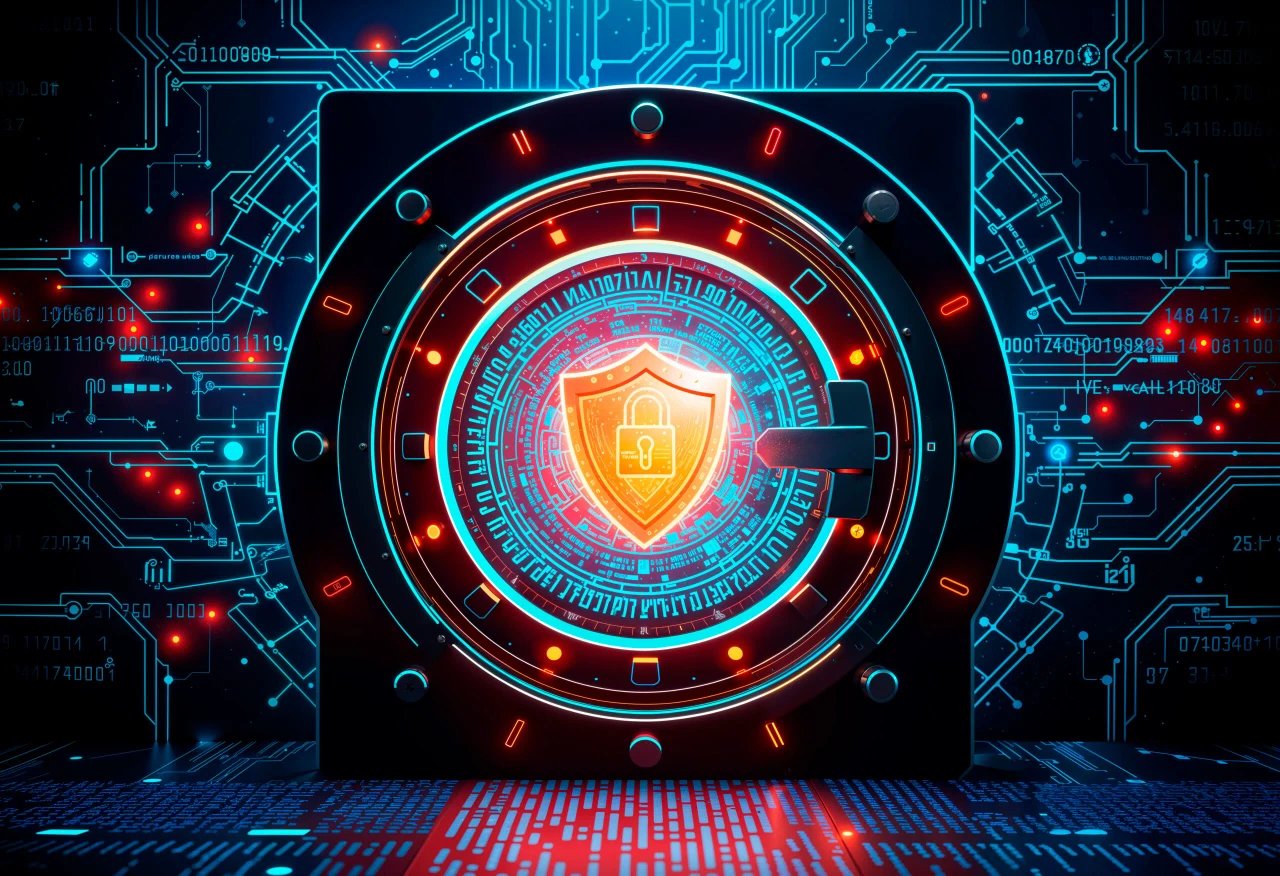
Every time you unlock your phone, send a private message, pay for something online, or install an app, encryption is working in the background to keep your information safe. For decades, this protection has rested on mathematical problems that ordinary computers would need thousands of years to solve. That assumption is now being questioned. Quantum computers work in a completely different way from the machines we use today, and they could one day break the encryption that protects banking systems, government records, healthcare data, and personal conversations.
This is why quantum security has moved from research labs into boardrooms, technology blogs, and government policy papers. Platforms like apkprotech.com have started covering the subject because it no longer matters only to cryptographers. App developers, small business owners, IT teams, and everyday smartphone users all have a stake in how the world prepares for the quantum era. The threat may not be fully here yet, but the work to defend against it has to start now.
In this article, we explain what quantum security actually means, why current encryption is at risk, what new standards are being rolled out, and what practical steps individuals and organisations can take today. The aim is to make a technical topic easy to follow without losing the details that matter.
Understanding Quantum Security in Simple Terms
Quantum security is the set of technologies, standards, and practices meant to keep data safe against attacks from quantum computers. Traditional computers process information as bits, and each bit is either a 0 or a 1. Quantum computers use qubits, which can exist in a combination of states at once through a property called superposition. When qubits are linked through entanglement, a quantum machine can explore certain kinds of problems far more efficiently than any classical computer.
That does not make quantum computers faster at everything. They will not make your web browser quicker or your games smoother. Their advantage shows up in specific mathematical tasks, and unfortunately, some of those tasks are exactly the ones modern encryption depends on. As the coverage on apkprotech.com points out, quantum security is not about replacing all of today’s technology. It is about identifying the weak points in our digital infrastructure and strengthening them before quantum machines become powerful enough to exploit them.
Why Quantum Computers Threaten Today’s Encryption
Most secure communication on the internet relies on public-key cryptography, mainly RSA and elliptic curve cryptography (ECC). These systems are secure because certain problems, such as factoring very large numbers or solving discrete logarithms, are extremely hard for classical computers. In 1994, mathematician Peter Shor showed that a large enough quantum computer could solve these problems efficiently. A working version of Shor’s algorithm at scale would effectively break RSA and ECC, exposing the key exchanges and digital signatures that secure websites, VPNs, software updates, and messaging apps.
Symmetric encryption, such as AES, is in a better position. Grover’s algorithm, another quantum technique, can speed up brute-force attacks, but only enough to roughly halve the effective key strength. That is why security experts recommend AES-256 for long-term protection, since it stays strong even against quantum attacks. The real emergency is public-key cryptography, which supports almost every secure connection we make online.
How close is the threat? Today’s quantum computers are still noisy and error-prone, and none can break real-world encryption. However, the estimates keep shrinking. In 2025, Google researchers published work suggesting that RSA-2048 could in theory be broken with fewer than one million noisy qubits in under a week, which is far fewer than earlier estimates. Nobody can give an exact date, but the direction is clear, and that is enough for governments and major tech companies to act.
The “Harvest Now, Decrypt Later” Problem
One of the most serious risks has nothing to do with when quantum computers arrive. Attackers can collect encrypted data today and store it until they have the tools to decrypt it. This strategy is known as “harvest now, decrypt later.” Think of medical records, legal documents, trade secrets, or classified communications that need to stay confidential for ten or twenty years. If that data is intercepted now, it could be readable in the future even though it looks perfectly safe today.
This is why the move to quantum-safe encryption cannot wait until a powerful quantum computer is officially announced. By then, years of sensitive information could already be in the wrong hands. For any organisation that handles data with a long shelf life, the deadline is effectively now.
Post-Quantum Cryptography: The New Global Standards
The main answer to the quantum threat is post-quantum cryptography (PQC). These are new encryption algorithms that run on ordinary computers but are built on mathematical problems that even quantum computers are not expected to solve efficiently. After an evaluation process lasting nearly eight years, the U.S. National Institute of Standards and Technology (NIST) published its first three finalised post-quantum standards in August 2024. In March 2025, it selected an additional algorithm, HQC, as a backup for key exchange in case weaknesses are ever found in the primary choice.
NIST’s transition guidance also proposes phasing out RSA and ECC, with these algorithms deprecated after 2030 and disallowed after 2035 for many uses. Other governments and security agencies are setting similar timelines. As apkprotech.com notes in its coverage of data protection trends, these standards give developers and businesses a clear, trusted foundation to build on instead of guessing which algorithms will survive.
The table below compares traditional algorithms with their quantum-resistant replacements:
| Purpose | Traditional Algorithm | Quantum Risk | Post-Quantum Replacement |
|---|---|---|---|
| Key exchange / encryption | RSA, ECDH | Broken by Shor’s algorithm | ML-KEM (FIPS 203), HQC as backup |
| Digital signatures | RSA, ECDSA | Broken by Shor’s algorithm | ML-DSA (FIPS 204), SLH-DSA (FIPS 205) |
| Symmetric encryption | AES-128 | Weakened by Grover’s algorithm | AES-256 |
| Hashing | SHA-256 | Mildly weakened | SHA-384 or SHA-3 |
How Quantum Security Affects Everyday Users and Apps
You might assume post-quantum cryptography is only for governments and big banks, but the change is already reaching ordinary users. Google Chrome and other major browsers now use hybrid key exchange that combines a classical algorithm with ML-KEM, and large content delivery networks support it for a big share of web traffic. Apple added post-quantum protection to iMessage with its PQ3 protocol, and Signal introduced its PQXDH protocol to protect conversations against future quantum attacks. Most people never notice these upgrades, which is exactly the point.
For Android users and app developers, the topic matters even more. Apps depend on signed updates, secure API connections, and encrypted local storage. If the digital signatures that verify an app’s authenticity were ever broken, attackers could push fake updates that look completely legitimate. Readers who follow apkprotech.com for app and APK news should understand that downloading apps from trusted sources and keeping them updated is not just good practice today. It is also how quantum-safe protections will reach your device once developers adopt them.
A useful example is a banking app. Today, it might use ECDH to set up a secure session with the bank’s server. A quantum-ready version would use a hybrid approach, combining ECDH with ML-KEM, so the connection stays secure even if one of the two methods is broken. To the user, nothing looks different, but the security underneath is much stronger.
Quantum Key Distribution vs Post-Quantum Cryptography
Quantum security discussions often bring up two different approaches, and they are easy to confuse. Post-quantum cryptography uses new mathematical algorithms that run on existing hardware and networks. It can be deployed through software updates, which makes it practical for the global internet. Quantum Key Distribution (QKD), on the other hand, uses the physics of quantum mechanics itself to share encryption keys. If someone tries to intercept the key, the act of measuring the quantum particles disturbs them, and the intrusion can be detected.
QKD sounds like the perfect solution, but it has real limitations. It needs specialised hardware, dedicated fibre connections or satellite links, and it works over limited distances without trusted relay points. Several national security agencies have said that PQC should be the main defence for most organisations, with QKD reserved for niche, high-security uses. As explained on apkprotech.com, the two technologies are not rivals. They can work together, but for most businesses and users, post-quantum cryptography is the realistic path forward.
Practical Steps Businesses Should Take Now
Moving to quantum-safe systems is a multi-year project, and organisations that start early will find it far less disruptive. The first and most important step is understanding where cryptography is actually used. Many companies are surprised to find encryption buried in old applications, third-party libraries, IoT devices, and vendor products they do not directly control. Without a clear inventory, there is no way to plan a migration properly.
Experts commonly recommend the following starting points:
- Build a complete cryptographic inventory covering all systems, apps, certificates, and vendors.
- Prioritise data that must stay confidential for many years, since it is most exposed to harvest-now attacks.
- Adopt crypto-agility so algorithms can be swapped without rebuilding entire systems.
- Test hybrid encryption that combines classical and post-quantum algorithms during the transition.
- Ask vendors and cloud providers for their post-quantum roadmaps and timelines.
Crypto-agility deserves special attention. Systems with hard-coded algorithms are difficult and expensive to update. Systems built to switch algorithms easily can adapt not only to the quantum transition but also to any future weakness found in today’s new standards. This flexibility is quickly becoming a core principle of modern security architecture.
What Individuals Can Do to Stay Protected
Most of the heavy lifting for quantum security will be done by technology providers, but individuals still have a role to play. The simplest and most effective habit is keeping your operating system, browser, and apps updated. Post-quantum protections arrive quietly through these updates, so a device running outdated software misses out on them. It is also wise to choose messaging apps and services that publicly commit to quantum-resistant encryption.
Good basic security habits still matter just as much. Strong unique passwords, a reliable password manager, two-factor authentication, and careful app downloads protect you against the threats that exist right now, which are far more common than quantum attacks. Quantum readiness does not replace everyday security hygiene. It adds a new layer on top of it. The guidance shared on apkprotech.com consistently highlights that the best protection is a combination of up-to-date technology and smart personal habits.
Challenges on the Road to Quantum-Safe Systems
The transition is not without obstacles. Post-quantum algorithms often use larger keys and signatures than RSA or ECC, which can increase bandwidth use and slow down devices with limited resources, such as sensors, smart cards, and older smartphones. Engineers are working to optimise performance, but some hardware will simply need to be replaced. For industries with long equipment life cycles, such as manufacturing, energy, and healthcare, this is a significant cost.
There is also a skills gap. Many IT teams have little experience with cryptographic migration, and mistakes in implementation can create new vulnerabilities even when the underlying algorithm is sound. Finally, new algorithms naturally carry some uncertainty because they have not faced decades of real-world attacks the way RSA has. This is exactly why hybrid approaches and crypto-agility are recommended. They provide a safety net while the new standards mature.
Conclusion
Quantum computing promises major advances in medicine, materials science, and logistics, but it also threatens the encryption that underpins our digital lives. The danger is not just a distant possibility. Through harvest-now, decrypt-later attacks, data being stolen today could be exposed tomorrow. The good news is that the world is responding. NIST has finalised post-quantum standards, major browsers and messaging apps are already using quantum-resistant encryption, and governments have set clear timelines for retiring vulnerable algorithms.
For businesses, the message is to start now by mapping where cryptography is used, protecting long-lived data first, and building systems flexible enough to adapt. For individuals, it means staying updated, choosing trustworthy apps and services, and keeping strong security habits. As the discussion on apkprotech.com makes clear, quantum security is not about panic but about preparation. Those who act early will move into the quantum era with their data, reputation, and trust intact.