Augmented Reality apkprotech.com Explores New Retail Innovation Trends

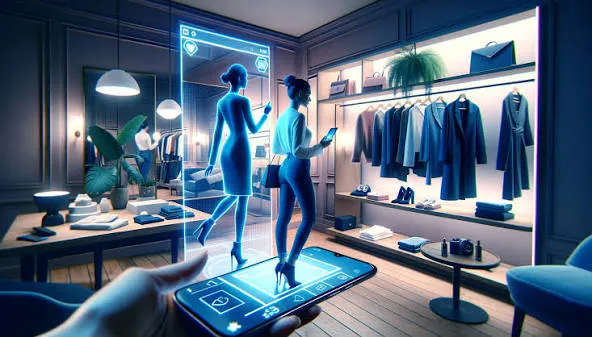
The retail industry is experiencing a significant transformation as digital technologies continue to change how customers discover, evaluate, and purchase products. Traditional shopping methods are increasingly supported by interactive digital experiences that make product exploration more convenient and engaging. Among these technologies, augmented reality (AR) is becoming an important innovation because it connects digital information with the physical shopping environment. Instead of relying entirely on product photographs, written descriptions, or physical demonstrations, shoppers can use AR to visualize products in realistic settings before making purchasing decisions. This development is creating new opportunities for retailers to improve customer experiences while making online and in-store shopping more interactive.
The growing interest in immersive shopping experiences reflects changing customer expectations. Modern consumers want convenient product discovery, accurate information, personalized recommendations, and greater confidence before spending money. Augmented reality can support these expectations through virtual furniture placement, digital clothing try-ons, interactive product demonstrations, and visual product customization. The discussions surrounding apkprotech.com highlight an interesting area of technological development where digital innovation and retail experiences increasingly intersect. As businesses explore new ways to combine physical and digital shopping, AR is becoming a valuable tool for creating more connected retail environments.
Understanding this technology is important for retailers, technology professionals, entrepreneurs, and customers interested in the future of digital commerce. Its influence extends beyond visual effects because it can improve product understanding, support purchasing decisions, and create stronger relationships between businesses and consumers. The future of retail innovation will depend partly on how effectively companies integrate these experiences into everyday shopping activities.
Understanding Augmented Reality in Modern Retail
Augmented reality is a technology that adds digital elements to a person’s view of the real world. These elements may include three-dimensional product models, animations, measurements, labels, interactive information, or virtual objects. Unlike virtual reality, which generally places users inside a completely digital environment, augmented reality allows them to remain connected to their physical surroundings while interacting with digital content.
In retail, this capability creates several practical applications. A customer shopping for furniture can use a smartphone camera to see how a virtual sofa might look in a living room. Someone interested in cosmetics can experiment with different shades through a digital face filter. Similarly, shoppers purchasing eyewear can examine how different frames appear on their faces without visiting multiple physical stores. These experiences help customers understand product appearance and suitability before completing a transaction.
The technology generally works through a combination of cameras, sensors, computer vision, software applications, and three-dimensional digital models. Modern smartphones have made many AR experiences accessible without requiring expensive specialist equipment. As mobile hardware and software capabilities improve, retailers have more opportunities to introduce interactive shopping features that fit naturally into existing customer journeys.
How AR Is Changing the Online Shopping Experience
Online shopping offers convenience, product variety, and flexible purchasing options, but it also has certain limitations. Customers cannot physically touch products, examine their actual dimensions, or immediately understand how an item might look in their personal environment. These limitations sometimes create uncertainty and make purchasing decisions more difficult. Augmented reality addresses part of this challenge by allowing consumers to interact with digital representations of products.
For example, an online furniture retailer can offer an AR feature that lets customers position virtual furniture inside their homes. By using a smartphone camera, shoppers can examine how a table, chair, or wardrobe fits within an available space. They can evaluate its proportions, compare different designs, and consider whether the product matches their existing interior decoration. This makes online product evaluation more practical and informative.
The same approach can benefit fashion, beauty, accessories, and consumer electronics businesses. Virtual try-on tools allow customers to explore clothing styles, makeup shades, watches, and eyewear through digital simulations. As highlighted by the technology-focused discussions associated with apkprotech.com, these applications demonstrate how digital tools can make online shopping more interactive while helping businesses respond to customers who expect more than conventional product images.
Virtual Try-On Technology and Personalized Shopping
Virtual try-on technology is one of the most recognizable applications of augmented reality in retail. It allows customers to preview selected products on their digital representation or through a live camera view. Fashion retailers can use this technology to display clothing styles, footwear, accessories, and eyewear. Beauty companies can provide digital previews of foundation shades, lipstick colors, and other cosmetic products.
Personalization makes these experiences particularly valuable. Instead of showing every customer the same product presentation, AR applications can support individual exploration. Customers can compare several options, adjust product variations, and identify styles that suit their preferences. This creates a more active shopping process in which consumers participate directly in discovering products.
However, virtual try-on technology should provide realistic representations rather than exaggerated visual results. Lighting conditions, camera quality, skin tones, body proportions, and product materials can influence how accurately a digital preview represents the actual item. Retailers should therefore combine AR demonstrations with clear product descriptions, size information, and realistic photographs. A reliable experience builds confidence, whereas an inaccurate simulation may create disappointment after delivery.
Interactive Product Visualization in Physical Stores
Although online shopping receives significant attention, physical retail stores can also benefit from augmented reality. Traditional stores have limitations related to display space, inventory availability, and the number of products that can be demonstrated simultaneously. AR can help retailers extend these physical environments by introducing digital product information and interactive displays.
Imagine visiting an electronics store where customers can point their smartphones toward a product display to access additional information. They might view technical specifications, explore internal product components through a three-dimensional model, or compare different versions of the same device. Similarly, a home improvement store could offer virtual demonstrations of furniture arrangements, lighting designs, or kitchen layouts.
These experiences can reduce the amount of time customers spend searching for basic information. They may also help store employees explain complex products more effectively. Rather than depending entirely on printed brochures or verbal descriptions, staff members can use interactive demonstrations to communicate product features.
For retailers, the main objective should be to make physical shopping more useful rather than replacing human interaction. Customers still value knowledgeable employees, product demonstrations, and the ability to examine physical items. AR works best when it strengthens these existing advantages.
Major Retail Applications of Augmented Reality
Different retail sectors are adopting AR according to their individual customer requirements. Some businesses focus on virtual visualization, while others use interactive product information or digital customization. The following table explains how the technology can support different industries.
| Retail Industry | AR Application | Customer Benefit |
|---|---|---|
| Furniture | Virtual room placement | Better understanding of product size and appearance |
| Fashion | Clothing and accessory try-ons | Easier style comparison |
| Beauty | Virtual makeup previews | Convenient cosmetic experimentation |
| Electronics | Interactive product demonstrations | Improved understanding of features |
| Home improvement | Digital interior visualization | Better planning and product selection |
| Automotive | Interactive vehicle visualization | Easier exploration of design options |
These applications show that augmented reality is not limited to one particular category of retail. Businesses can adapt the technology according to their products, customer demographics, and available digital infrastructure. The discussions around apkprotech.com also reflect the importance of understanding how emerging technology can support practical commercial activities rather than serving only as an entertaining digital feature.
Artificial Intelligence and Augmented Reality Integration
Artificial intelligence is creating additional opportunities for AR-powered shopping experiences. While augmented reality focuses on combining digital elements with the physical environment, AI can help analyze information, recognize objects, understand customer preferences, and support personalized recommendations. When these technologies work together, retailers can create more intelligent shopping applications.
For example, an AI-supported retail application might identify a product category through a camera and display relevant information through an AR interface. A furniture shopping application could recommend different colors or designs based on the customer’s selected room style. Similarly, a fashion platform might suggest complementary accessories after recognizing a selected clothing item.
AI can also help businesses improve digital product representations and organize large product catalogs. Retailers may use intelligent systems to manage product information, analyze customer interactions, and identify which digital experiences attract the most engagement. These capabilities can help businesses make better decisions about their technology investments.
Nevertheless, combining AI with AR requires careful attention to customer privacy, data quality, and transparency. Applications that use camera access, facial information, or personal preferences should clearly explain how information is collected and processed. Technology should improve convenience without making customers uncomfortable about their personal data.
Benefits of Augmented Reality for Retail Businesses
The adoption of augmented reality can offer several commercial advantages when the technology is implemented with a clear business objective. One important benefit is improved product understanding. Customers who can visualize products in realistic settings may find it easier to evaluate their options and make informed decisions. This is particularly valuable for products that depend heavily on appearance, dimensions, or compatibility with a particular environment.
Another advantage is customer engagement. Interactive experiences encourage shoppers to spend time exploring products instead of simply scrolling through photographs. This can make digital storefronts more memorable and help retailers differentiate themselves in competitive markets. Businesses can also use AR experiences to communicate product features in ways that are easier to understand.
Other potential advantages include:
- Better purchasing confidence: Customers can preview selected products before making a purchase.
- Improved product discovery: Interactive demonstrations make it easier to explore different product options.
- Stronger customer engagement: Immersive experiences encourage active participation.
- More informed decisions: Digital visualization provides additional context about product appearance and functionality.
- Retail differentiation: Businesses can introduce modern shopping features that distinguish their customer experience.
However, these advantages are not automatic. Retailers must ensure that AR applications are accurate, accessible, easy to operate, and relevant to their products. A complicated application that customers rarely use will not deliver meaningful commercial value.
Challenges in Implementing AR Retail Solutions
Despite its potential, augmented reality presents several implementation challenges. Development costs can be significant, especially when businesses require detailed three-dimensional product models, custom applications, and integration with existing retail systems. Smaller retailers may find it difficult to invest in advanced technology without first understanding whether their customers will use it regularly.
Device compatibility is another important consideration. Although modern smartphones support many AR features, performance can vary according to hardware specifications, operating systems, camera capabilities, and available processing power. Retailers need to test their applications across different devices to avoid excluding customers who use older smartphones.
Privacy and security also deserve attention. Camera-based applications may process images of customers, homes, or surrounding environments. Companies must establish responsible data practices and communicate their privacy policies clearly. They should collect only information that is necessary for providing the requested service.
Another challenge involves digital accuracy. Poorly designed product models can create unrealistic expectations about colors, dimensions, textures, and materials. Businesses must regularly review their digital assets and update product information when designs or specifications change.
How Retailers Can Successfully Adopt Augmented Reality
Successful AR adoption requires more than purchasing software or introducing an impressive demonstration. Retailers should first identify a genuine customer problem that the technology can solve. For a furniture business, the priority might be helping customers visualize products inside their homes. For a cosmetics retailer, virtual makeup previews may provide greater value. Selecting an application that addresses an actual shopping challenge increases the likelihood of customer adoption.
Businesses should begin with a manageable implementation rather than attempting to transform their entire retail operation immediately. A small pilot project can help evaluate customer interest, application performance, technical requirements, and operating costs. Feedback from real users can then guide improvements before the technology is introduced across additional product categories.
Retailers should also consider the following priorities during implementation:
1. Understand customer expectations: Identify which parts of the shopping experience create confusion or inconvenience.
2. Select suitable technology: Choose AR tools that match the products, business model, and available resources.
3. Prioritize usability: Make sure customers can access and operate the experience without complicated instructions.
4. Measure performance: Evaluate engagement, customer feedback, conversion trends, and overall business value.
5. Improve continuously: Update digital models, application features, and product information as customer needs change.
The approach discussed through apkprotech.com is relevant to this broader movement because retail innovation becomes meaningful when technology is connected to real customer requirements. A carefully planned implementation is more valuable than introducing advanced features simply because they are available.
The Future of Augmented Reality in Retail
The future of AR-powered retail will likely involve more connected and personalized digital experiences. Improvements in smartphone processing, computer vision, artificial intelligence, and three-dimensional content creation may make interactive shopping more accessible. Customers could experience more realistic product previews, receive contextual information while exploring stores, and compare products through digital interfaces that respond to their surroundings.
Wearable technology may also influence the next stage of development. Smart glasses and other spatial computing devices could eventually allow shoppers to access product information without constantly looking at their smartphones. For example, customers might view navigation assistance, product details, or promotional information through a compatible wearable display. However, widespread adoption will depend on affordability, comfort, practical usefulness, and consumer acceptance.
Retailers may also combine AR with technologies such as digital payment systems, inventory management platforms, and personalized customer services. These integrations could create smoother shopping journeys in which product discovery, evaluation, and purchasing are connected through a consistent digital experience.
Still, the industry should avoid treating AR as a replacement for every traditional shopping method. Many customers will continue to prefer physical demonstrations, personal assistance, and straightforward online product pages. The most successful retail strategies will offer different shopping options and allow consumers to choose the experience that suits them best.
Conclusion
Augmented reality is becoming an important part of retail innovation because it helps connect digital product information with real-world shopping experiences. From virtual clothing try-ons and furniture visualization to interactive store displays, the technology gives customers additional ways to understand products before making purchasing decisions. It can improve engagement, support personalization, and make online and offline shopping more informative.
The growing interest represented by apkprotech.com reflects a wider shift toward practical technology adoption across modern businesses. However, successful implementation depends on more than visual innovation. Retailers must consider usability, device compatibility, privacy, accuracy, development costs, and customer expectations before introducing AR solutions.
As artificial intelligence, mobile computing, and immersive technologies continue to develop, augmented reality may become increasingly integrated into everyday retail activities. Businesses that approach this transformation strategically can create more convenient and engaging customer experiences while maintaining the human interaction and product quality that remain essential to successful retail operations.